best dry fruit for pregnancy
Best Dry Fruits for Pregnancy: A Complete Guide (800+ Words)
Pregnancy is a special journey that requires a healthy and balanced diet to support both the mother and the growing baby. Along with fruits, vegetables, whole grains, and protein-rich foods, dry fruits can be an excellent addition to a pregnancy diet. They are naturally rich in healthy fats, protein, fiber, vitamins, and minerals that help meet the increased nutritional needs during pregnancy. However, because dry fruits are calorie-dense, they should be eaten in moderate portions and as part of a balanced diet. Always follow your doctor or dietitian’s advice, especially if you have gestational diabetes, food allergies, or other medical conditions.
Why Dry Fruits Are Good During Pregnancy
Dry fruits provide several essential nutrients that support maternal health and fetal development. They are a convenient and healthy snack that can help provide:
- Healthy fats for overall nutrition
- Protein for growth and tissue repair
- Dietary fiber to support healthy digestion
- Iron to support normal blood formation
- Calcium and magnesium for bones and muscles
- Vitamin E and antioxidants that help protect cells from oxidative stress
When eaten in appropriate amounts, dry fruits can be a nutritious addition to meals or snacks throughout pregnancy.
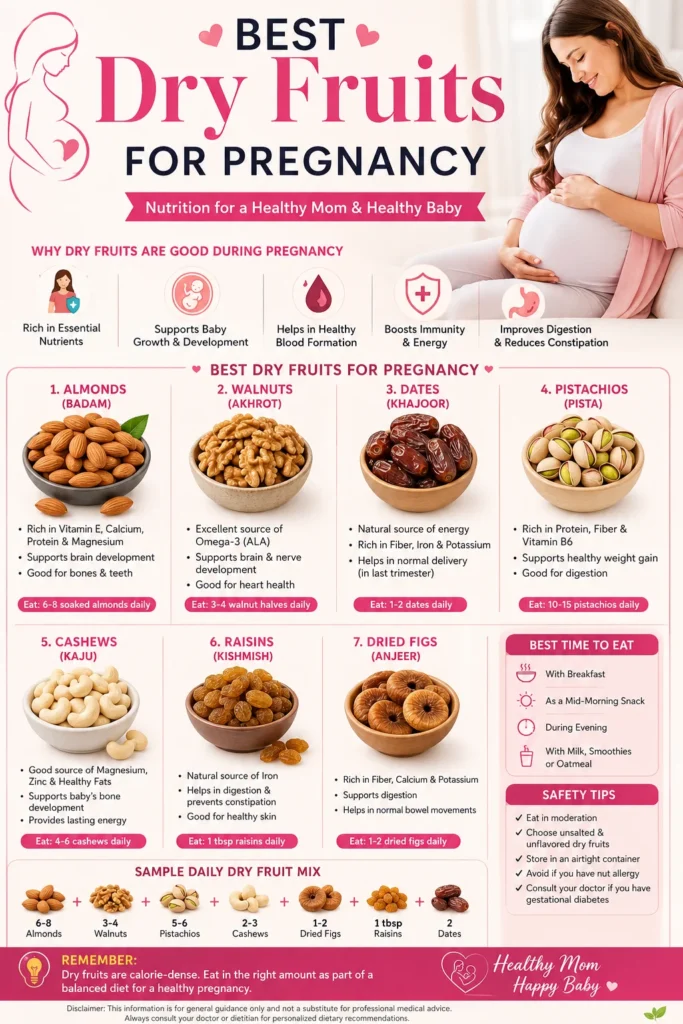
Best Dry Fruits for Pregnancy
1. Almonds (Badam)
Almonds are among the most popular dry fruits during pregnancy. They contain vitamin E, calcium, protein, healthy fats, and magnesium.
Benefits:
- Support a balanced pregnancy diet
- Provide healthy fats and protein
- Source of calcium and magnesium
- Rich in antioxidants
Recommended Amount:
About 6–8 soaked or plain unsalted almonds daily.
2. Walnuts (Akhrot)
Walnuts are known for providing plant-based omega-3 fat (ALA), along with antioxidants and minerals.
Benefits:
- Provide healthy fats
- Contribute to overall nutritional intake
- Easy and satisfying snack
Recommended Amount:
Around 3–4 walnut halves per day.
3. Dates (Khajoor)
Dates contain natural sugars, fiber, potassium, and small amounts of iron and magnesium.
Benefits:
- Natural source of energy
- Good source of dietary fiber
- Contains several important minerals
People with gestational diabetes or high blood sugar should discuss suitable portions with their healthcare provider.
4. Pistachios (Pista)
Pistachios are rich in protein, fiber, vitamin B6, and healthy fats.
Benefits:
- Nutritious snack
- Good source of protein
- Provides fiber for digestive health
Recommended Amount:
10–15 unsalted pistachios per day.
5. Cashews (Kaju)
Cashews contain magnesium, zinc, protein, and healthy fats.
Benefits:
- Support daily nutrient intake
- Rich in minerals
- Delicious and filling snack
Eat plain, unsalted cashews in moderation because they are calorie-dense.
6. Raisins (Kishmish)
Raisins provide natural sweetness along with fiber, potassium, and small amounts of iron.
Benefits:
- Convenient snack
- Supports fiber intake
- Naturally sweet alternative to candy
Enjoy small portions because raisins are concentrated in natural sugars.
7. Dried Figs (Anjeer)
Dried figs are a source of fiber, calcium, and potassium.
Benefits:
- Help increase fiber intake
- Provide minerals such as calcium
- Can be soaked before eating if preferred
A serving of 1–2 dried figs is commonly recommended.
Best Time to Eat Dry Fruits
Many people enjoy dry fruits:
- With breakfast
- As a mid-morning snack
- During the evening
- Mixed with yogurt or oatmeal
- Added to smoothies
Choose plain, unsalted varieties whenever possible.
Sample Daily Dry Fruit Mix
A balanced daily mix may include:
- 6–8 almonds
- 3–4 walnut halves
- 5–6 pistachios
- 2–3 cashews
- 1–2 dried figs
- 1 tablespoon raisins
- 2 dates (if suitable for your health needs)
Adjust portions based on your doctor’s advice and your overall calorie needs.
Safety Tips
- Eat dry fruits in moderation.
- Choose unsalted and unflavored varieties.
- Store them in an airtight container.
- Avoid them if you have a known nut allergy.
- If you have gestational diabetes, discuss portion sizes with your healthcare provider.
- Wash or soak dry fruits when appropriate before eating.
Conclusion
Dry fruits can be a healthy part of a balanced pregnancy diet. Almonds, walnuts, dates, pistachios, cashews, raisins, and dried figs provide valuable nutrients such as healthy fats, protein, fiber, vitamins, and minerals. Eating a variety of dry fruits in moderate amounts can help support overall nutrition during pregnancy. Remember that no single food can provide everything you need, so combine dry fruits with fruits, vegetables, whole grains, dairy or fortified alternatives, and protein-rich foods for a well-rounded diet. Always consult your doctor or a registered dietitian for personalized dietary advice during pregnancy.
SEO Keywords: Best dry fruits for pregnancy, pregnancy nutrition, almonds during pregnancy, walnuts in pregnancy, dates for pregnancy, healthy pregnancy snacks, dry fruits for pregnant women, pregnancy diet, nutritious foods for pregnancy, dry fruits benefits during pregnancy.