dry fruit benefit more than vitamins &minerals
Dry Fruits Benefits: More Than Vitamins & Minerals
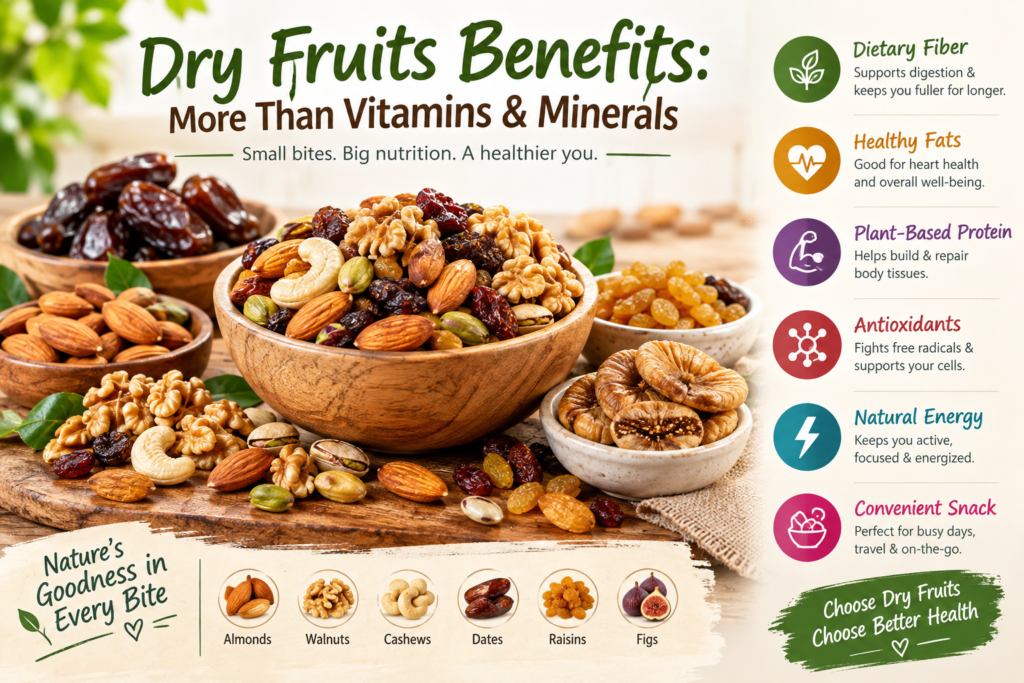
When people talk about dry fruits benefits, they often mention vitamins and minerals first. But there is much more to these naturally delicious foods. Nuts and dried fruits can also provide dietary fiber, healthy fats, plant compounds, protein and a convenient source of nourishment for busy days.
From almonds and walnuts to dates, raisins, figs and cashews, dry fruits can add flavor, texture and nutritional value to everyday meals and snacks. The key is choosing suitable varieties, watching portions and including them as part of a balanced eating pattern.
Dry Fruits Benefits Go Beyond Vitamins and Minerals
Dry fruits and nuts are nutrient-dense foods, meaning they can provide several nutrients in relatively small portions.
Almonds, for example, contain vitamin E, fiber, monounsaturated fats, magnesium and other nutrients. Nuts more generally provide protein, fiber, fats, vitamins, minerals and antioxidant compounds.
This combination is one reason dry fruits can be a practical addition to everyday eating. Instead of thinking about one vitamin or mineral at a time, it is useful to look at the overall nutritional package.
1. Dry Fruits Provide Dietary Fiber
One of the important dry fruits benefits is their contribution to dietary fiber.
Fiber is found naturally in plant foods and plays an important role in digestion. It can also help you feel satisfied after eating. Nuts and unsweetened dried fruits can be convenient sources of fiber when included in an appropriate portion.
For people looking for simple snack options, a small serving of nuts or dried fruit can be an easy way to add plant-based foods to the day.
However, dried fruit is more concentrated than fresh fruit because much of the water has been removed. This means portion size matters.
2. Nuts Provide Healthy Fats
Not all fats are the same. Many nuts contain predominantly unsaturated fats, including monounsaturated and polyunsaturated fats.
Almonds, walnuts, pistachios and other nuts can therefore contribute healthy fats to the diet. The American Heart Association lists nuts and seeds among foods that provide healthy fats, protein and fiber.
This makes nuts more than simply a crunchy snack. They can add richness and texture to oatmeal, yogurt, salads, homemade snack bars and other foods.
3. Dry Fruits Can Add Plant-Based Protein
Nuts and seeds can contribute protein to meals and snacks. While they should not necessarily be considered a complete protein replacement for every meal, they can complement other nutritious foods.
Try adding chopped almonds or walnuts to breakfast, mixing nuts and unsweetened dried fruit into homemade trail mix, or using them as a topping for yogurt or oatmeal.
Combining different foods can make snacks more satisfying and enjoyable.
4. Antioxidants and Plant Compounds
Another interesting part of dry fruits nutrition is the presence of naturally occurring plant compounds.
Nuts contain compounds such as polyphenols and other phytonutrients. Almonds, for example, contain flavonoids, plant sterols and phenolic acids.
It is important not to treat individual antioxidants as miracle ingredients. Nutrition is more complicated than simply finding one “superfood” or one nutrient. A varied diet containing many different plant foods is a more useful approach.
5. Dry Fruits Are Convenient Snacks
Nutrition is not the only reason people choose dry fruits.
Convenience matters too.
Almonds, cashews, walnuts, raisins and dates are easy to store and carry. They can be useful at work, during travel, on busy mornings or between meals.
A small container of nuts and unsweetened dried fruit can be a simple alternative to snacks that contain large amounts of added sugar or highly processed ingredients.
This makes dry fruits especially useful for people who want practical snack choices without complicated preparation.
6. They Add Taste and Texture to Everyday Meals
Healthy eating does not have to be boring.
Dry fruits can make everyday meals more interesting. Add chopped walnuts to porridge, almonds to homemade granola, raisins to rice dishes or dates to homemade energy bars.
The natural sweetness of dried fruit can also complement nuts and seeds in homemade snacks.
This variety makes it easier to build enjoyable meals while including different plant foods.
7. Choose Dry Fruits Carefully
Not every dry fruit product is the same.
When shopping, check the ingredient and nutrition labels. Prefer products with little or no added sugar when appropriate, and watch for excessive salt or additional ingredients.
Some dried fruits are coated, sweetened or prepared with additional ingredients. Reading the label helps you understand exactly what you are buying.
Portion size is also important. Nuts and dried fruits are nutritious but relatively energy-dense, so a moderate serving can be a sensible approach. Mayo Clinic also notes that nuts and dried fruits can be healthy high-fiber snacks while emphasizing their calorie density.
How to Include Dry Fruits in Your Daily Diet
There are many simple ways to enjoy dry fruits benefits without making your meals complicated.
You can:
- Add almonds or walnuts to breakfast.
- Mix unsweetened dried fruit with nuts for a homemade snack.
- Add raisins to oatmeal or traditional dishes.
- Use chopped nuts as a salad topping.
- Add dates to homemade energy bars.
- Sprinkle seeds and nuts over yogurt.
- Keep a small portion available for a convenient snack.
The goal is not to eat large quantities. Instead, use dry fruits as one part of a varied and balanced eating pattern.
Dry Fruits: Small Foods With a Bigger Nutritional Picture
The biggest lesson about dry fruits benefits is that their nutritional value goes beyond vitamins and minerals.
Nuts and dried fruits can contribute fiber, healthy fats, protein and naturally occurring plant compounds while also offering convenience, flavor and texture.
Almonds, walnuts, cashews, dates, raisins and other dry fruits can all have a place in a balanced diet. Choosing minimally processed options, checking labels and keeping portions sensible can help you enjoy them as part of everyday meals and snacks.
So the next time you reach for a handful of dry fruits, remember that you are enjoying more than just vitamins and minerals. You are choosing a versatile food that can bring nutrition, taste and convenience together in one simple snack.