Pecan Nuts for Cancer Patients: 5 Healthy Dry Fruits
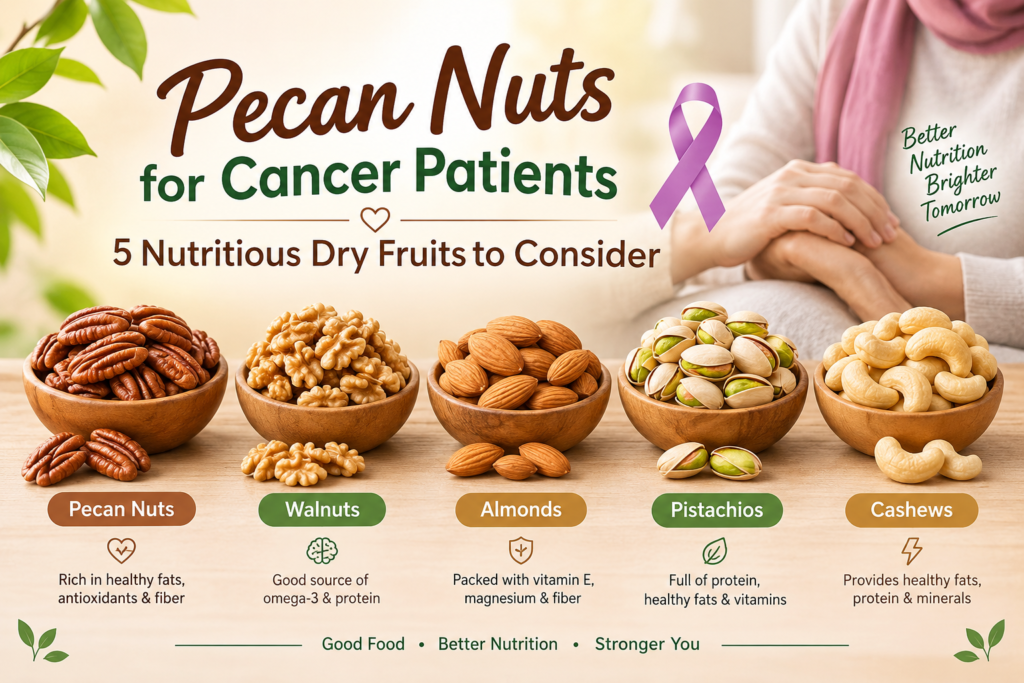
Pecan Nuts for Cancer Patients: 5 Nutritious Dry Fruits to Consider.
Introduction
Good nutrition is an important part of maintaining strength and overall well-being during cancer treatment. The body may need enough calories, protein, healthy fats, vitamins, minerals, and other nutrients to support everyday needs. However, nutritional requirements can vary depending on the type of cancer, treatment, appetite, and overall health.
Among nutrient-dense foods, pecan nuts for cancer patients can be considered as part of a balanced diet. Pecans provide healthy unsaturated fats, fiber, protein, minerals, and antioxidants. However, pecans and other dry fruits should not be considered a treatment or cure for cancer.
In this article, we explore five nutritious dry fruits that may fit into a balanced eating pattern during cancer care.
1. Pecan Nuts
Pecans are a delicious source of healthy fats, fiber, plant-based protein, and minerals. They also contain antioxidant compounds, including polyphenols.
For people who have difficulty eating large meals, a small portion of pecans can provide energy and nutrients in a compact serving. They can be added to oatmeal, yogurt, smoothies, salads, or soft foods.
The healthy fats in pecans can also contribute to overall dietary energy. This may be useful when maintaining adequate calorie intake is difficult.
However, portion size matters because nuts are calorie-dense. Choose plain, unsalted pecans whenever possible.
2. Walnuts
Walnuts are another nutritious choice. They provide healthy fats, including plant-based omega-3 fatty acid ALA, along with protein, fiber, and minerals.
Adding walnuts to meals can increase the nutritional value of foods such as oatmeal, porridge, yogurt, and salads. They can also be eaten as a small snack.
Research continues to investigate the relationship between nut consumption and cancer-related outcomes. However, walnuts should be viewed as part of a healthy diet rather than as a cancer treatment.
3. Almonds
Almonds provide vitamin E, magnesium, fiber, protein, and healthy fats. These nutrients can contribute to overall nutritional quality.
For cancer patients who need convenient, energy-rich foods, almonds may be useful as part of meals or snacks. Almond butter can also be an option when chewing whole nuts is difficult.
If appetite is low, finely chopped or ground almonds may be easier to add to foods such as smoothies, oatmeal, or yogurt.
People experiencing mouth sores or swallowing difficulties should ask their healthcare team whether whole nuts are appropriate.
4. Pistachios
Pistachios contain protein, fiber, healthy fats, and several vitamins and minerals. They can make a convenient snack and may add variety to a balanced diet.
Choose unsalted or lightly salted pistachios instead of heavily salted varieties. Excess sodium may be undesirable for some people, particularly when they have been advised to limit salt.
Pistachios can also be sprinkled over yogurt, porridge, or soft meals to add flavor and nutrients.
5. Cashews
Cashews provide healthy fats, plant-based protein, copper, magnesium, and other nutrients. Their creamy texture also makes them versatile in cooking.
Cashews can be blended into smoothies or used to prepare nutritious sauces and spreads. This can be helpful for people who find crunchy foods difficult to eat during treatment.
As with other nuts, choose plain varieties without excessive salt, sugar, or added flavors.
Why Dry Fruits Can Be Helpful During Cancer Care
Dry fruits and nuts can contribute valuable nutrients to a balanced eating pattern. They are particularly useful because a relatively small serving can provide energy, healthy fats, fiber, and minerals.
However, every cancer patient has different nutritional needs. Some people may need higher-calorie foods, while others may need to manage blood sugar, digestive symptoms, swallowing problems, or treatment-related side effects.
Therefore, the best diet depends on individual circumstances.
Important Safety Tips
If you are considering pecan nuts or other dry fruits during cancer treatment, keep these points in mind:
- Choose fresh, plain, unsalted nuts when possible.
- Keep portions moderate because nuts are energy-dense.
- Avoid nuts if you have a known nut allergy.
- Follow your healthcare team’s advice about food safety during treatment.
- If you have mouth sores, chewing problems, or swallowing difficulties, consider softer or ground forms after discussing them with your healthcare professional.
- If your immune system is weakened, follow your oncology team’s food-safety recommendations.
- Ask a registered dietitian or oncology healthcare professional if you have specific nutritional requirements.
Can Pecan Nuts Cure Cancer?
No. Pecan nuts cannot cure, prevent, or replace medical treatment for cancer. Although pecans contain beneficial nutrients and antioxidant compounds, eating them should be considered part of an overall nutritious diet.
Cancer treatment should always be guided by qualified healthcare professionals. Dietary changes can complement medical care, but they should not replace chemotherapy, radiation therapy, surgery, immunotherapy, or other prescribed treatments.
Conclusion
Pecan nuts for cancer patients can be a nutritious addition to a balanced eating pattern because they provide healthy fats, fiber, minerals, and antioxidant compounds. Other nutritious choices include walnuts, almonds, pistachios, and cashews.
Nevertheless, nutrition during cancer treatment should be personalized. Appetite, treatment side effects, medical conditions, allergies, and nutritional goals can all influence which foods are appropriate.
For the best results, enjoy a variety of nutrient-rich foods and discuss your individual diet with your oncologist or a qualified oncology dietitian.
Suggested internal keywords: pecan nuts benefits, pecan nutrition, dry fruits benefits, walnuts benefits, almonds benefits, healthy snacks during cancer treatment, nutritious foods for cancer patients.
Suggested image alt text: Pecan nuts and five healthy dry fruits for a balanced diet during cancer care.